Espolòn Tequila: Two Printed Rugs for a Halloween Bar Night
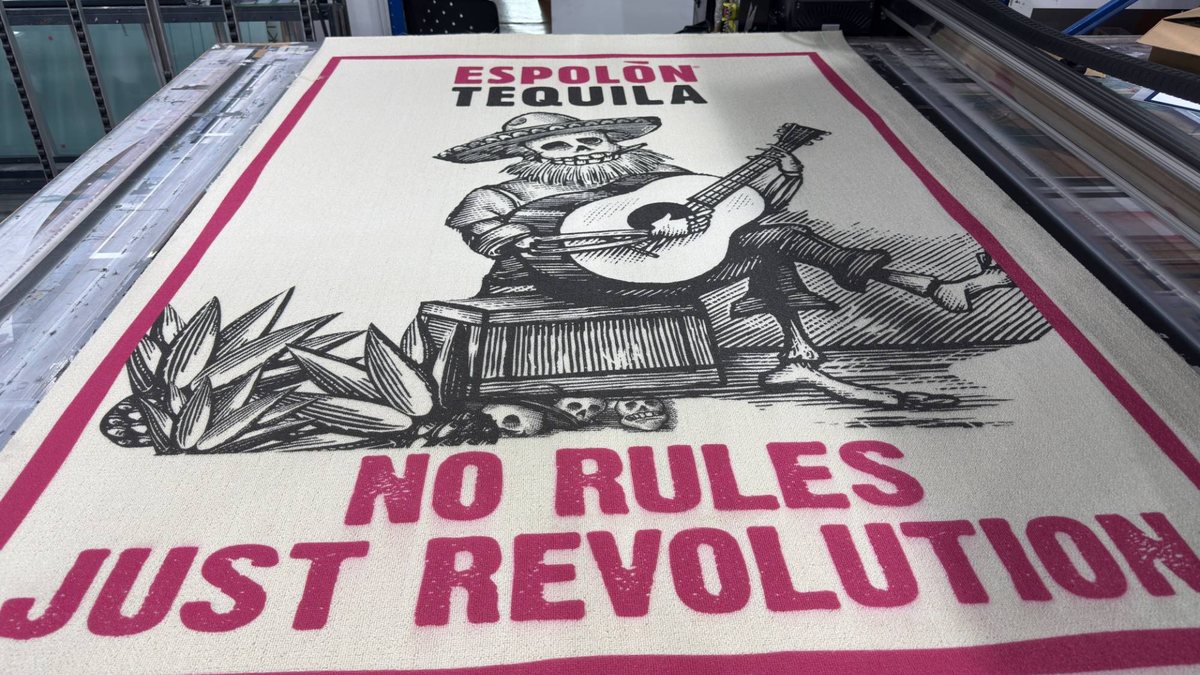
Espolòn Tequila needed two rugs for a bar on Halloween night, each 2 by 2 metres, carrying the brand’s Día de los Muertos artwork.
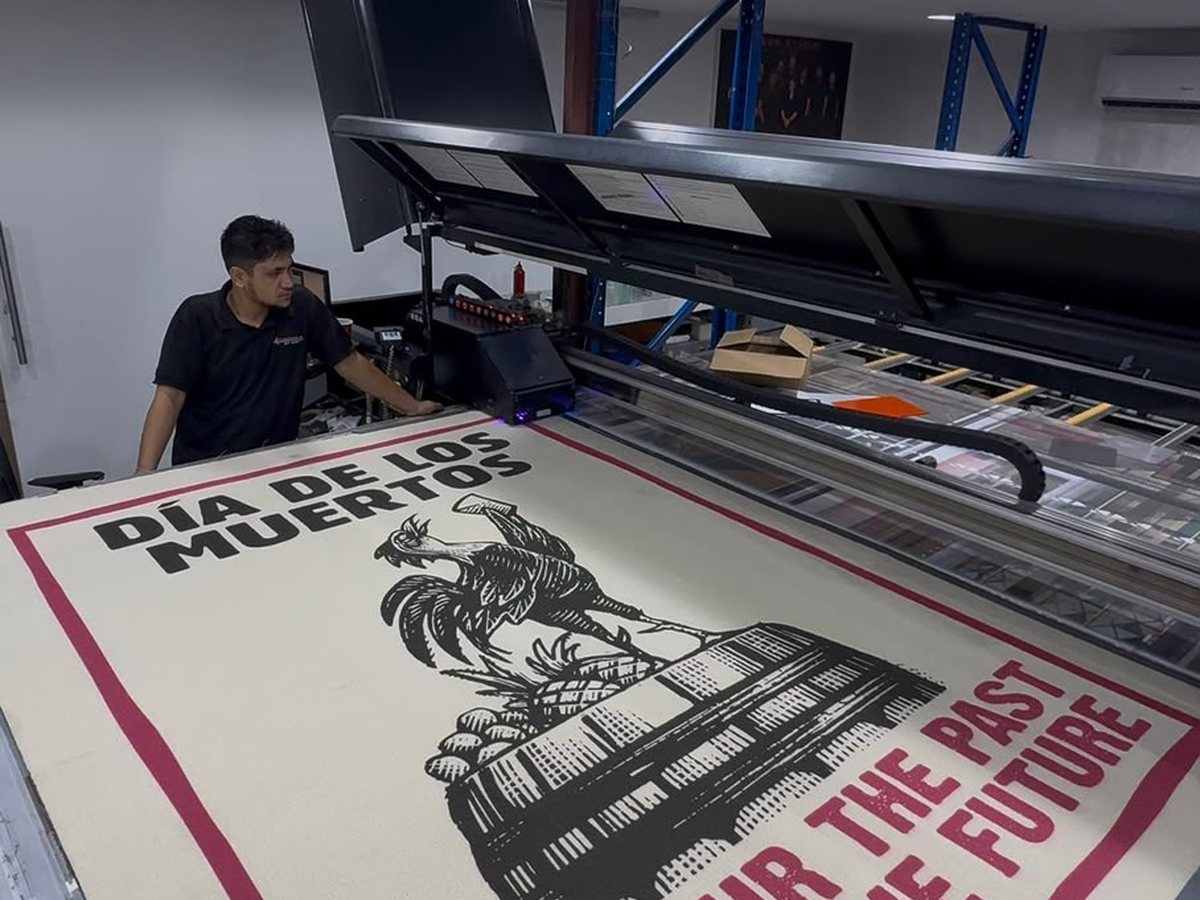
Sun Studio printed both direct onto cream cut-pile rugs at our Al Quoz studio in Dubai: the linocut illustration and lettering in black, and a printed border in a different colour on each rug.
Project snapshot
- Client
- Espolòn Tequila
- Application
- Floor rugs for a bar on Halloween night
- Quantity
- 2 rugs
- Size
- 2 x 2 metres each
- Material
- Cream cut-pile rugs
- Design
- Día de los Muertos linocut artwork and lettering in black, with a printed border: magenta on one rug, crimson on the other
- Method
- Direct UV printing, cured on the pile
- Machine
- IQDEMY EVO 2500, a belt flatbed 2.5 metres wide
- Printing service
- Rug and carpet printing
- Year
- 2026
Linocut line work, on a surface made of fibre ends
Fine line work is the hardest thing to put on a pile rug. Ink lands on the tips of the fibres first, and every tip sits at a slightly different height, so a hairline that is crisp on board can break up into a dotted line on pile.
This artwork is almost entirely hairlines. It is drawn in the linocut tradition of the Mexican calavera print, where tone is built from cross-hatching rather than from shades of grey. If those strokes close up the image goes muddy; if they break, it looks worn before it is used.
One artwork, two colourways, and the pile as a third colour
The two rugs share one artwork file and differ by one colour. The border and the display lettering are magenta on one and crimson on the other, which is a change in the file rather than a second production run. Built-to-order rugs do not work that way: a tufted or woven rug carries one yarn per colour, so a second colourway is a second rug to make.
The cream of the rug is doing the work of a third colour. Nothing is printed across the field, so the ground you see between the strokes is the pile itself, and only the black and the border colour are laid down. That keeps the ink load low over most of the surface, which is also what keeps the hand of the rug soft underfoot.
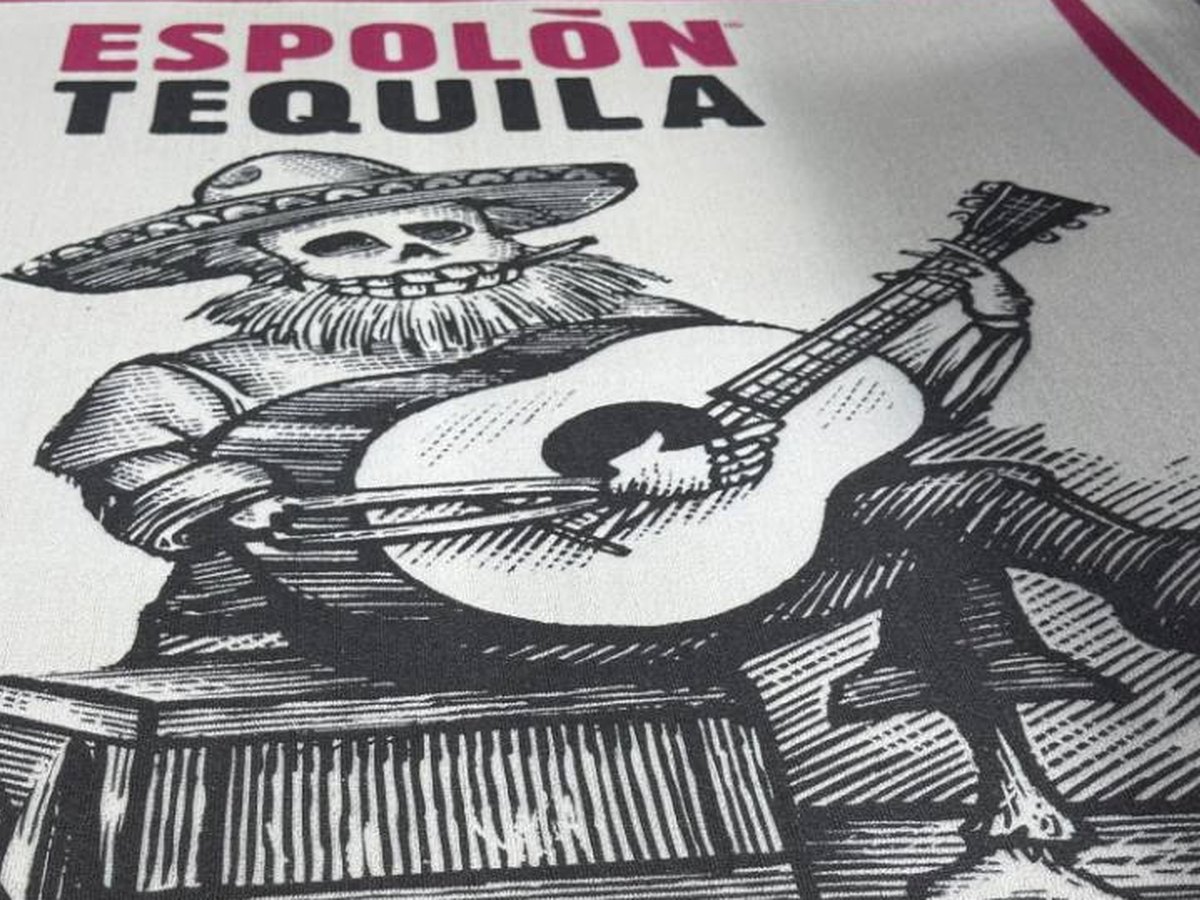
Holding fine black line work on a cut pile
Each rug was laid flat on our IQDEMY EVO 2500, a belt flatbed 2.5 metres wide. At 2 by 2 metres a rug fits across the belt with room either side, and the belt carries it through the press so nothing has to be repositioned mid-print.
The printhead passes above the pile without touching it and the UV lamps on the carriage cure each pass as it goes. LED-UV curing is cold, so the fibres are not scorched or flattened, and the rug comes off the belt dry and ready to handle.
On a cut pile, shade changes with the direction the fibres lie, the way it does on velvet, so a printed rug reads a little darker from one end than the other. On a square rug that is worth settling first: a square can be laid down four ways, and this artwork has a top.
Two 2 x 2 metre rugs, in time for the night
Two rugs, each 2 by 2 metres, finished for the bar to lay down on Halloween night. The line work held on the pile, and both colourways came off the same file.
Short-notice work like this is where printing beats the made-to-order methods outright. There was nothing to tuft and no loom to set up, so the lead time was the artwork and the sample, not the manufacturing. Which method suits which job is set out in tufted, woven or printed.
Have a rug for an event or an activation?
Send the finished size, the artwork and the date you need it. No rug yet? We can supply a plain one in your size. We print a sample first so you can approve the colour on the pile.