Precious Metal Printing in Dubai
Sun Studio prints directly onto solid gold and solid silver at our Al Quoz studio. The artwork is printed onto the metal itself and cured there, so there is no sticker, no vinyl and no transfer film between the image and the piece.
This is a different job from printing gold-coloured ink or foil onto paper. Here the precious metal is the substrate, and it stays visible as metal.
Tell us whether the face is flat or shaped, and send a photograph taken from the side.
What we can print on
Precious metal arrives in a narrow range of forms, and the shape of the face matters as much as the metal:
- Gold pieces and bars — commemorative, collector and protocol pieces.
- Silver pieces and bars — the same work in a brighter, more reflective metal.
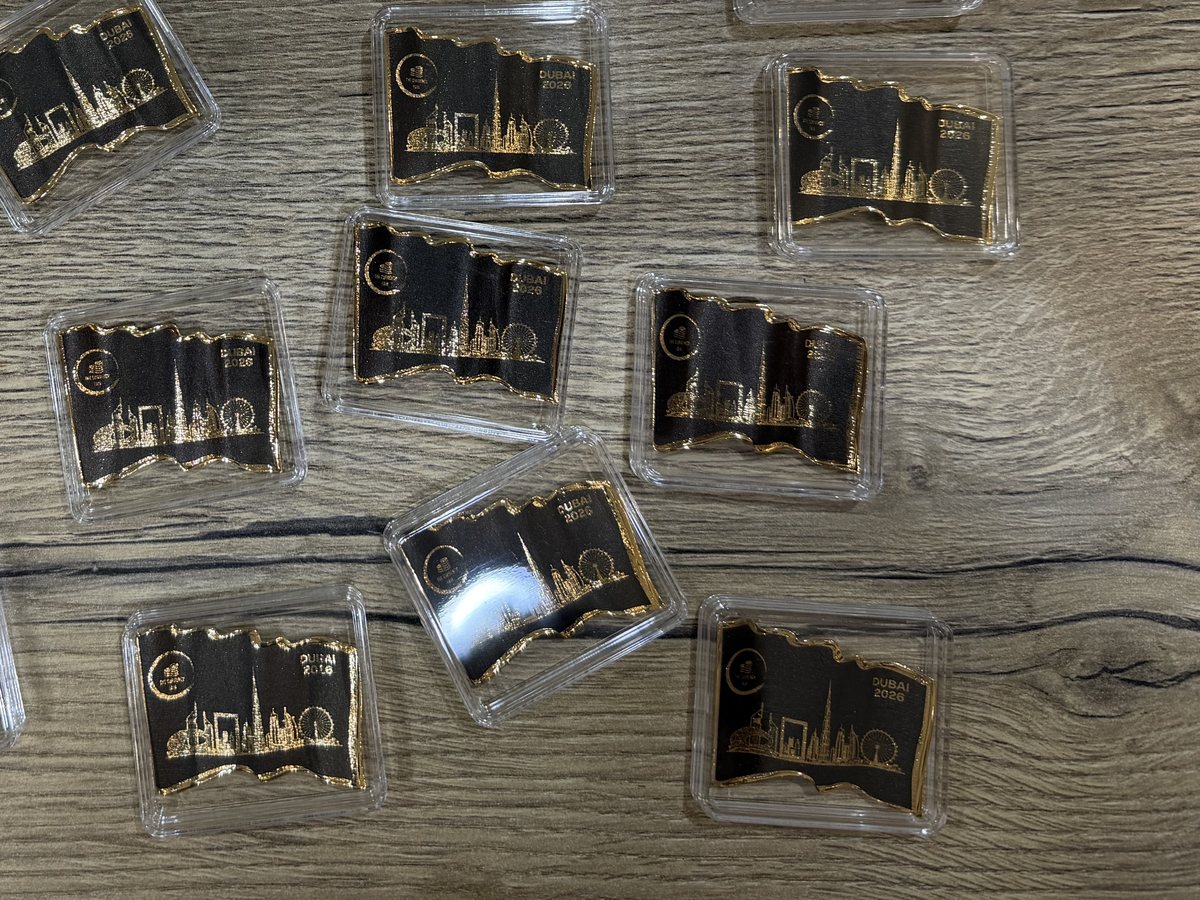
- Shaped and contoured faces — pieces whose surface rises and falls rather than sitting flat.
- Medals, coins and tokens — small formats where artwork has to stay legible at scale.
- Plated and filled stock — where the surface is precious metal over a base.
- Presentation pieces — printed before encapsulation or framing.
Printing capabilities
What suits a piece depends on the finish, the shape and what the artwork has to do:
- Direct UV printing — cured onto the metal with nothing laminated over it.
- White ink base — laid first where artwork has to read as true colour rather than take on the metal beneath it.
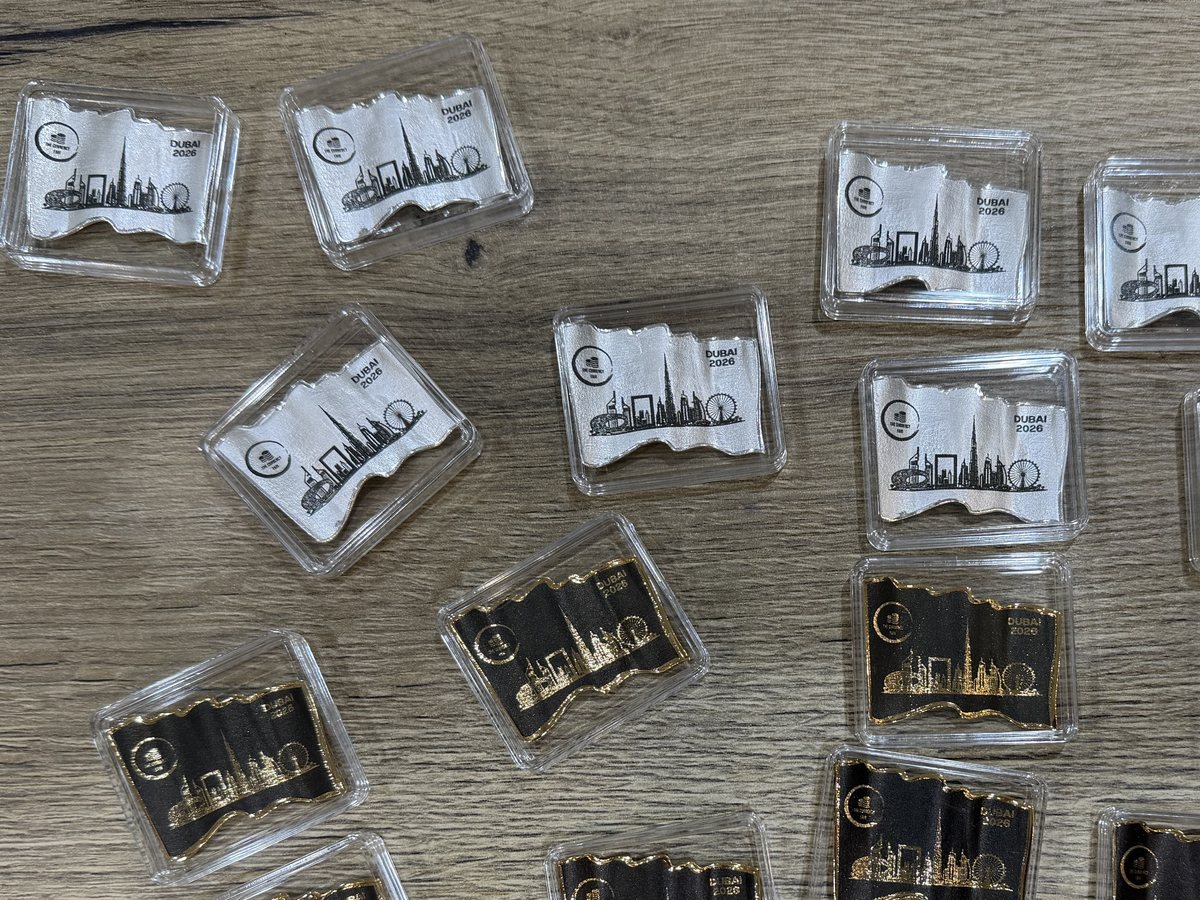
- Print without white — colour laid straight onto the metal so the gold or silver reads through the image.
- Reverse-ground artwork — printing the background and leaving the design as bare metal, so the artwork is the piece itself.
- Fine line and micro detail — skylines, guilloche, text and marks.
- Sample-first production — proved on the actual material before a run.
Printing on precious metal or printing in gold
These are different services and are often confused when a job is specified, so it is worth separating them before anything is ordered.
Printing on precious metal
The substrate is gold or silver. The piece has material value before anything is printed, the metal stays visible as metal, and the ink is cured onto its surface. This is the work described on this page.
Printing in gold
The substrate is paper, card or board, and gold is the effect — hot foil, metallic ink or a gold-toned varnish. Nothing precious is involved. It is a finishing process, and a commercial printer is usually the right supplier for it.
Who this is for
Precious metal work reaches us from:
- Minting houses and bullion brands — commemorative issues and series pieces.
- Jewellers — bespoke and one-off commissions.
- Government and protocol offices — delegation and state gifting.
- Corporate VIP programmes — board, founder and milestone pieces.
- Event and anniversary organisers — dated keepsakes in a counted run.
What to send before we can quote
Precious metal is quick to assess once we can see the piece:
- The metal — gold, silver, plated or filled.
- The shape of the face — flat, domed, shaped or contoured. This is the key fact.
- A photograph from the side — surface shape is far easier to see than to describe.
- Dimensions of the printable face.
- Quantity, and whether the pieces are already finished or still to be made.
- The artwork, and whether any part of it should be left as bare metal.
How it works
The metal, the shape of the piece, the quantity and the artwork.
We confirm whether the face is flat enough to print as is, and whether white should go under the artwork.
On precious metal we always print and check a sample on the real material before committing a batch.
The run is printed, checked and packed.
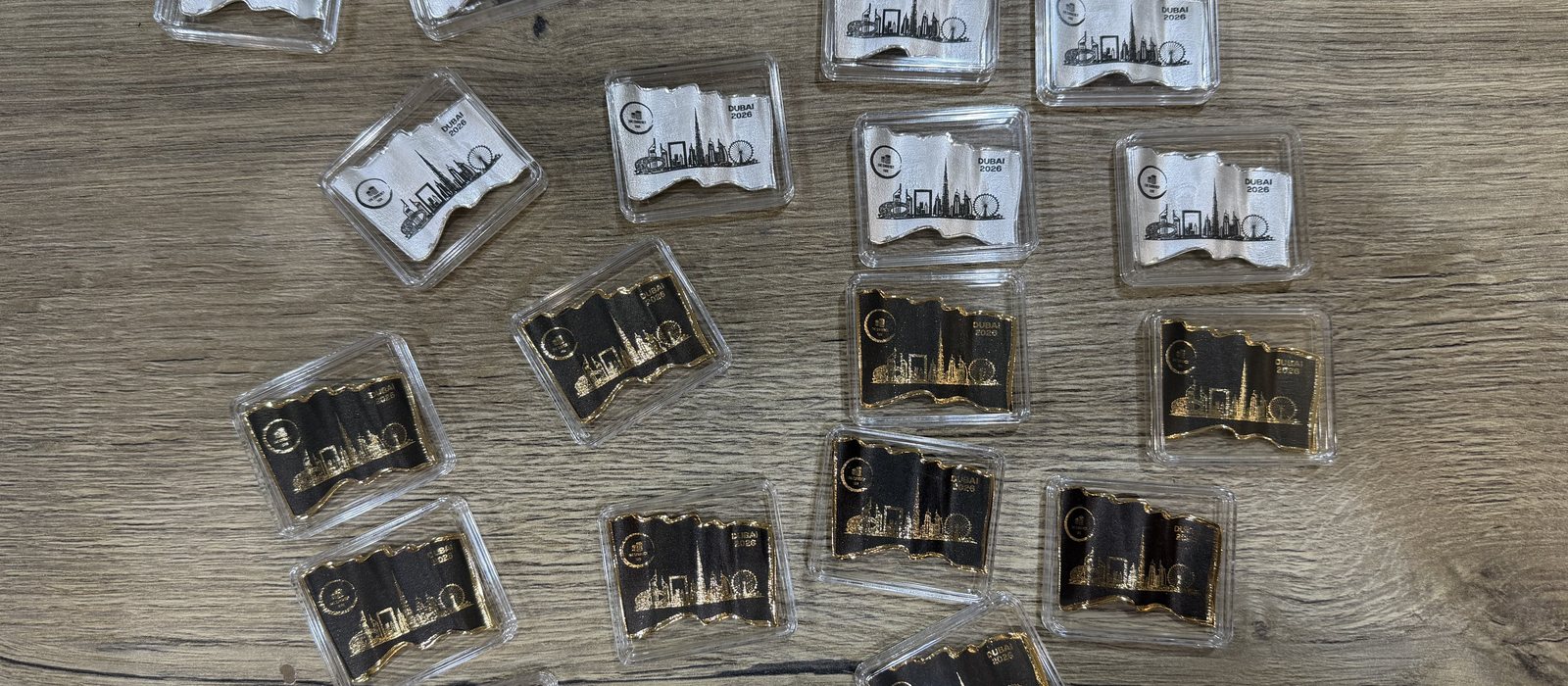
Precious metal work we have produced
Sun Studio work, printed direct onto the metal in Al Quoz.
Technical considerations
Precious metal is demanding for reasons that have little to do with its value and everything to do with its surface. Two things decide the outcome: how bright it is, and whether the face is flat.
What matters in practice:
The metal is part of the colour
A flatbed sets one height
Detail costs distance
Reflected UV is managed in setup
Adhesion is decided at the interface
There is no spare stock
Common questions
Can you UV print directly onto real gold?
Can you print on real silver?
Can UV printing be done on a curved or non-flat surface?
Does reflective metal damage a printhead?
Will the print rub off precious metal?
Can you print a single piece or a small run?
Is this the same as gold foil printing?
Have a precious metal piece to print?
Send the metal, the shape of the face, a photograph taken from the side and the artwork. We will tell you whether it can be printed as it is, whether white should go underneath, and what a sample will take.