Printing Directly onto Solid Gold and Silver for Phoenix Minting
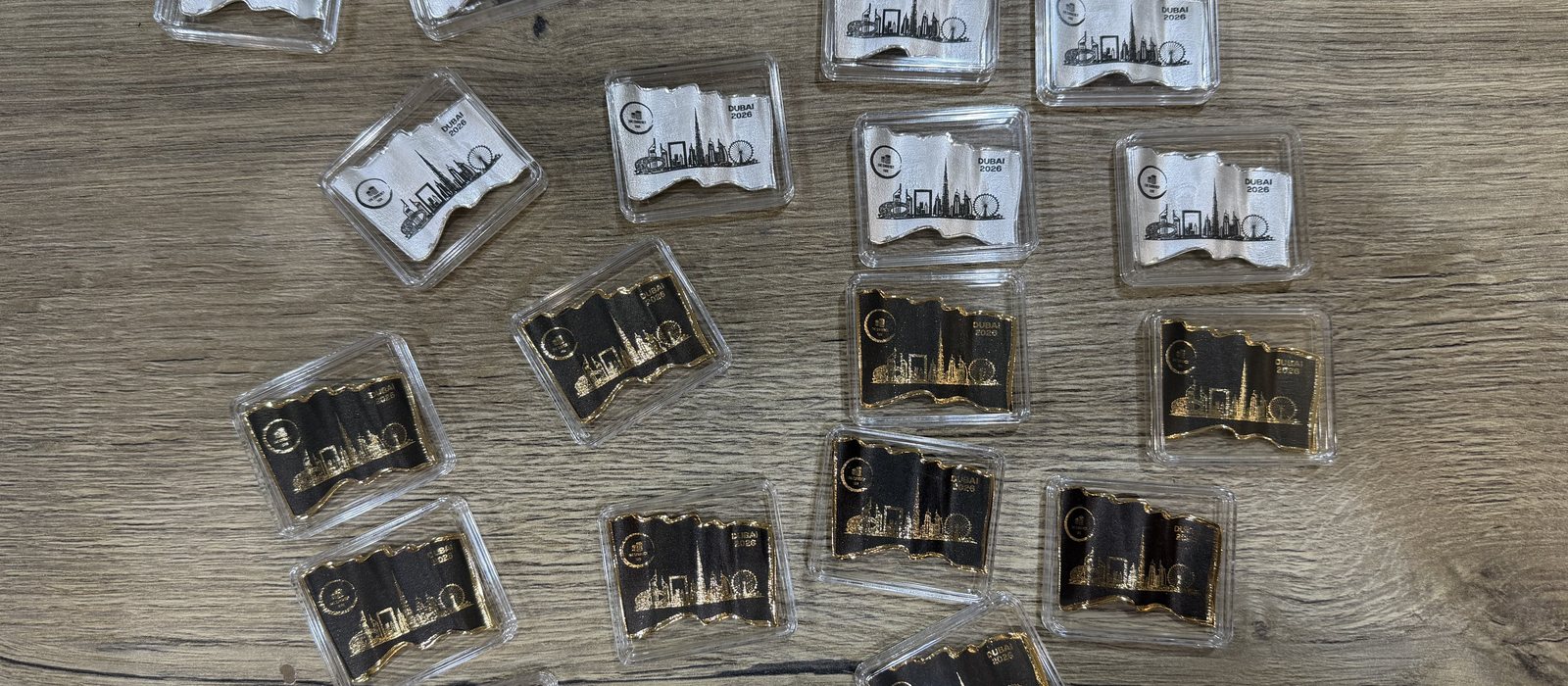
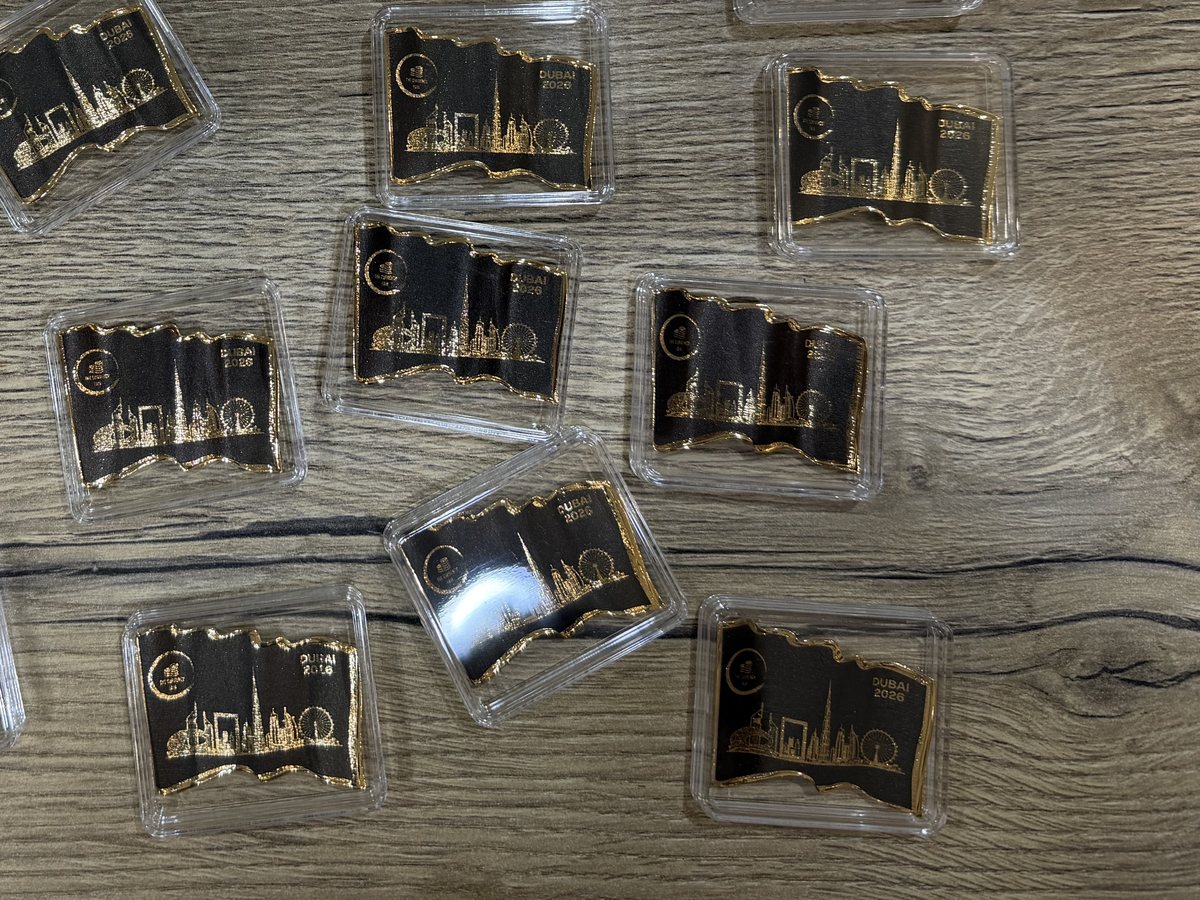
Phoenix Minting Jewelry brought Sun Studio a set of commemorative pieces in solid gold and solid silver. Each one is cut to a waving flag profile, and the face is not flat: it rises and falls across the piece the way cloth does.
The artwork had to go onto the metal itself. Not a label, not a vinyl, not a transfer film laid over the top, but ink printed onto the surface and cured there, so that nothing sits between the image and the piece.
Project snapshot
- Client
- Phoenix Minting Jewelry
- Location
- Al Quoz, Dubai
- Material
- Solid gold and solid silver
- Surface
- Waving profile, height varies across the face
- Printing service
- Direct UV printing onto precious metal
- Application
- Commemorative and VIP gifting pieces
- Press
- Direct Color Systems UV84 flatbed
The brief
A precious metal piece is the least forgiving thing a print shop is handed. The material has a value before anyone prints on it, the pieces are made in a counted run, and there is no version of the job where a spoiled one is simply reprinted on fresh stock.
The client reports that the suppliers they had approached were set up for flat sheet work and could not take the combination: solid precious metal, a face that rises and falls, and fine line artwork that had to stay legible at the size of a business card.
Our approach
A flatbed printer does not follow a contour. It carries the printhead across the bed at one height, and that height has to clear the tallest point anything in its path reaches. On a flat sheet the ink crosses a gap of about a millimetre and a half. On a face that waves, the gap is set for the crests, which means the ink crosses a longer distance over the troughs.
That distance is what costs detail. Drop placement error grows with the gap and with how fast the carriage is travelling, so the further the ink has to fly, the more a hairline in a skyline drifts from where the file put it. The setup work was in holding that gap as tight as the crests allowed and running the carriage to suit it, then proving the result on the actual pieces before the run.
Production detail
Bright metal changes what the ink does twice over. Process UV inks are semi-transparent: light travels through the ink film, is returned by whatever lies beneath it, and passes back through on its way to the eye. On a mirror surface the metal becomes part of the colour rather than something the colour sits on, which is why an opaque white underbase is laid first wherever artwork has to read as true colour.
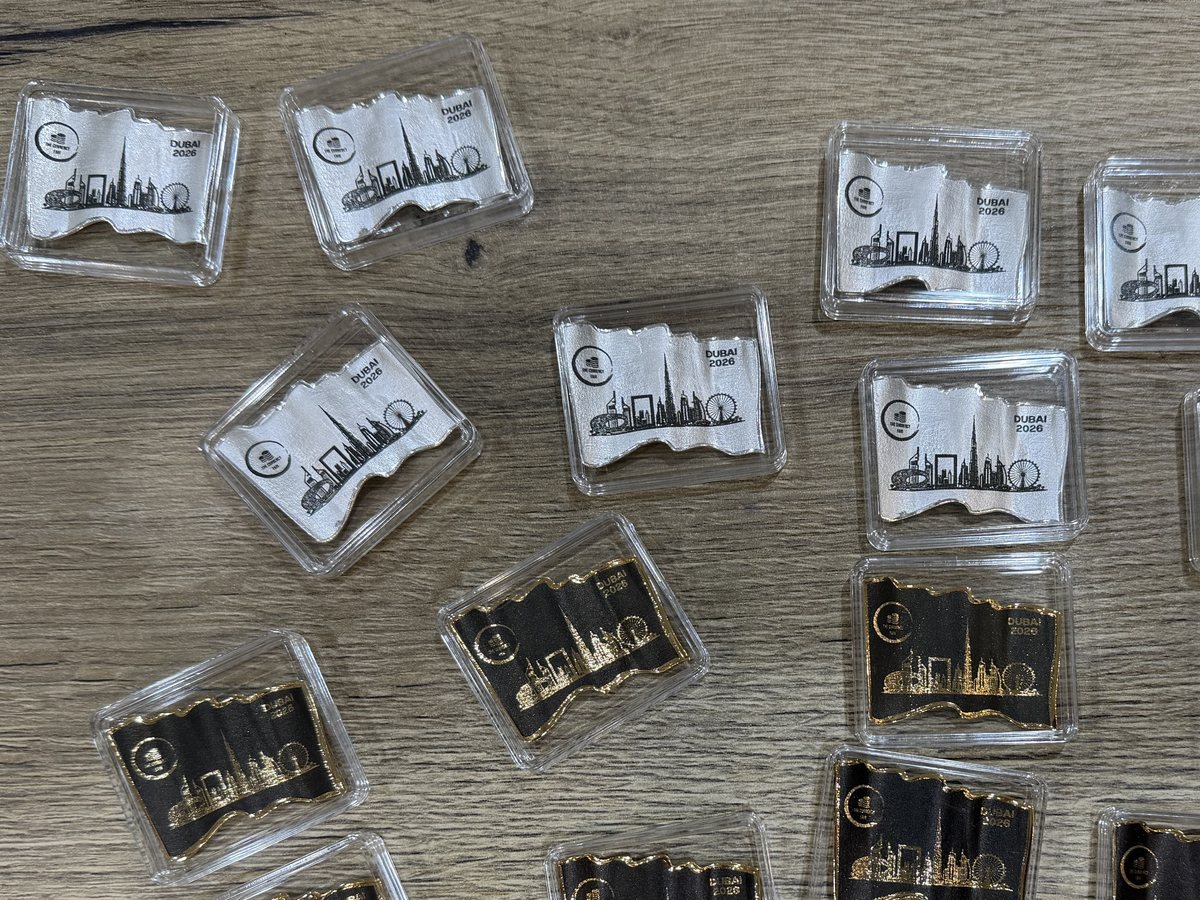
These pieces use that behaviour instead of correcting it. On the gold, the skyline is not printed at all: the black ground is printed around it and the bare metal is left to be the artwork, so the towers and the wheel are gold because they are gold. On the silver, the relationship is reversed and the skyline is laid in black across the bright face.
The second effect is light. A polished surface returns some of the press’s own UV back towards the nozzle plate, where it can begin curing ink at the nozzle. That is a geometry problem rather than a property of the metal, and it is handled in how the work is set up and run, not by the substrate being unusual.
Adhesion on bare polished metal is decided at the interface, because nothing soaks in. How thoroughly the surface is degreased before it reaches the bed matters more than anything else, alongside the ink chemistry and the cure. Every combination is tested on the material it will actually run on.
The result
Fine artwork printed onto solid gold and solid silver, holding its line from the crest of the wave to the trough, with no film, foil or applied layer between the image and the metal.
طباعة UV على المعادن الثمينة في دبي
وصلت إلى صن ستوديو في القوز بدبي قطع تذكارية من الذهب والفضة، وجهها ليس مستويًا بل مموّج على هيئة علم يرفرف، يرتفع وينخفض عبر السطح.
على هذا الوجه طُبع مشهد أفق دبي مباشرةً بطباعة UV: يستقر الحبر على المعدن نفسه ثم يُعالَج فورًا. لم يُستخدم ملصق ولا فينيل ولا ورق نقل، ولا طبقة وسيطة تفصل الصورة عن القطعة.
الصعوبة في تفاوت ارتفاع السطح. فرأس الطباعة يعمل على ارتفاع واحد يُضبط ليمرّ فوق أعلى نقطة في القطعة، ما يعني أن الحبر يقطع مسافة أطول فوق المناطق المنخفضة. ضبط هذا الارتفاع، والتجربة على القطع نفسها قبل الإنتاج، هما ما حفظ حدّة الخطوط من قمة الموجة إلى قاعها.
والنتيجة قطعة يبقى فيها المعدن معدنًا، وتصبح الصورة جزءًا من سطحه لا شيئًا مضافًا إليه. وتشمل خدماتنا الطباعة على المعادن الثمينة والأسطح اللامعة والمنحنية وغير المستوية، والقطع المخصصة والهدايا الفاخرة.
Have an unusual object to print?
Send the material, a photograph that shows the surface from the side, and the artwork. If the piece is valuable or shaped, say so — that is the part that decides the setup.